Day Trips from Valencia: Escaping the City Without Actually Leaving
The best excursions from Valencia, from medieval castles to natural parks, all within two hours
Paul Osito leaves Valencia reluctantly and discovers that the surrounding region is, if anything, even better than the city itself. He returns immediately.
Day Trips from Valencia: Escaping the City Without Actually Leaving
One of Valencia's underrated qualities is its location. The city sits at the centre of a region that contains medieval hilltop towns, natural parks, rice paddies, mountain villages, and some of the best beaches in Spain — all within two hours by car or public transport. If you are staying in Valencia for more than three days, you would be doing yourself a disservice by not exploring at least one of these.
Here are the best day trips from Valencia, ranked by how much I personally enjoyed them.
La Albufera: Valencia's Secret Lake
La Albufera is a freshwater lagoon 10km south of Valencia, surrounded by rice paddies and separated from the Mediterranean by a narrow strip of sand dunes and pine forest. It is the most important wetland in Spain, home to over 250 species of birds, and the place where Valencian paella was invented.
The lake itself is beautiful — particularly at sunset, when the water turns gold and the rice fields glow. The village of El Palmar, in the middle of the rice paddies, has several excellent restaurants serving traditional Valencian rice dishes cooked in the wood-fired manner that produced the original paella.
How to get there: Bus line 25 from Valencia city centre (€1.50, 30 minutes). Or rent a car for more flexibility.
What to do: Take a boat trip on the lake (€5-8 per person), eat paella at El Palmar, walk or cycle through the rice paddies, watch the sunset from the lake shore.
Time needed: Half day minimum, full day recommended.
Xàtiva: The Town That Burned Down Valencia
Xàtiva (Játiva in Castilian) is a medieval town 60km south of Valencia, built around a spectacular castle that sits on a ridge above the town. The castle is one of the best-preserved medieval fortifications in Spain, and the views from the top are extraordinary.
Xàtiva has a complicated relationship with Valencia. In 1707, the town supported the Habsburg side in the War of Spanish Succession. When the Bourbon Philip V won, he ordered Xàtiva burned to the ground as punishment. The town was rebuilt, but the Xativans never forgot — to this day, the portrait of Philip V in the town museum hangs upside down.
The town itself is charming — a maze of medieval streets, baroque churches, and small plazas. The Colegiata Basílica is magnificent. The local restaurants serve excellent rice dishes and the local wine is underrated.
How to get there: Train from Valencia Estació del Nord (€5-7, 45 minutes, frequent services).
Time needed: Full day.
Morella: The Medieval City in the Sky
Morella is 170km north of Valencia, in the mountains of the Maestrazgo region. It is one of the best-preserved medieval towns in Spain — a walled city perched on a rocky outcrop, with a castle at the top and a Gothic basilica halfway up. The entire town is a UNESCO World Heritage Site.
The drive to Morella is through spectacular mountain scenery — limestone gorges, ancient villages, and landscapes that look like they belong in a different century. The town itself is extraordinary: the medieval walls are intact, the streets are narrow and cobbled, and the castle offers views that stretch for 50km in every direction.
Morella is best visited in spring or autumn — the winters are cold and the summers are hot. The town has several good restaurants serving mountain cuisine (lamb, mushrooms, truffles) and a famous local sausage (the longaniza de Morella) that is worth the drive alone.
How to get there: Car is essential. The drive takes about 2.5 hours.
Time needed: Full day, or stay overnight.
Cullera: The Beach Town That Locals Love
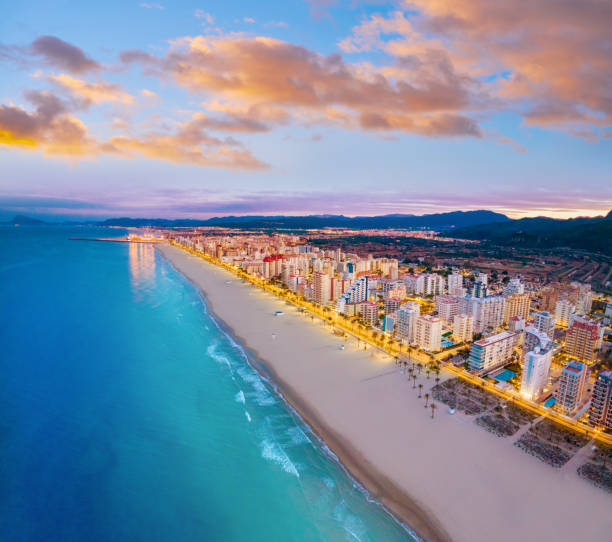
Cullera is a beach town 40km south of Valencia, at the mouth of the Júcar river. It has a castle, a lighthouse, a fishing port, and several excellent beaches that are significantly less crowded than Valencia's urban beaches in summer.
The town is popular with Valencians — it is where many city residents have their summer apartments — and has a more authentic atmosphere than some of the more tourist-heavy coastal towns. The seafood is excellent, particularly the fresh fish from the local fishing fleet.
How to get there: Train from Valencia (€4-5, 45 minutes) or car.
Time needed: Half day to full day.
Sagunto: Romans, Moors, and a Very Good Castle
Sagunto is 25km north of Valencia, and it has one of the most layered histories of any town in Spain. The Romans built a theatre here (still used for performances today). The Moors built a castle. The medieval Jewish quarter is one of the best preserved in Spain. And the town was the site of one of the most dramatic sieges in ancient history — the Carthaginian siege of 219 BC that triggered the Second Punic War.
The castle, which stretches for nearly a kilometre along the ridge above the town, is extraordinary. The Roman theatre at its base has been controversially restored (the restoration is architecturally interesting but historically dubious), and the old town below is pleasant to wander.
How to get there: Train from Valencia (€3-4, 30 minutes, very frequent).
Time needed: Half day.
Organising Day Trips with Osito Hub
Our concierge service can organise any of these day trips for you — car hire, private drivers, guided tours, restaurant reservations, or simply detailed advice on how to do it yourself. We have been doing this for ten years and we know all the shortcuts, the best restaurants, and the things that the guidebooks miss.
Just ask. That is what we are here for.

Ready to Experience Valencia?
Stop reading about it and start living it. Book directly with Osito Hub for the best price, personal concierge service, and a welcome basket of local Valencian treats.
We respond within 2 hours. No spam, ever.